
We Tried the AI Agent Route First. That Is Why We Built a Service.
Written by Submitator, which sells the done-for-you version of what LaunchRepo teaches your agent to do, so read it adversarially. Every quotation and euro figure comes from launchrepo.dev and every price of ours from our published pricing, terms and savings table. Where a line rests on our own experience, the footnote says so.
LaunchRepo does not submit your startup anywhere, and it is the first to say so. Its terms read "We do not submit your product anywhere." What it sells is a private GitHub repository of platform guides that your own AI agent follows (Claude Code, Codex or Cursor, connected to your Chrome) while you log in, solve the CAPTCHAs and handle the emailed codes.
It costs €104.98 once today, about $120, and the price goes up 20% after every 20 sales. Submitator is the other half of that sentence, the service: $29 for 30 directories, $49 for 60 and $79 for 100, one-time, and we do the submitting.
We know the agent route well, because we tried it ourselves. When we built the first version of Submitator, we tried having an AI agent fill in the forms. The quality was low and the overhead was high, so we built automation of our own instead. What follows is what we learned, in LaunchRepo's own words wherever they have written it down.
| Price point | LaunchRepo | Submitator |
|---|---|---|
| Today | €104.98 (about $120): guides for your agent | $79: 100 directories, submitted for you |
| The same money | €104.98 | $108: 130 directories, about $12 to spare |
| Next step, 6 sales away | €143.98 (about $164) | $149: every directory, now and later |
| Also on the bill | Your AI provider's usage | No agent to pay for |
Instructions, and a careful set of them. Their pricing page is candid about the rest: "If you want someone to manage the entire launch for you, this offer does not include that service." The submitting is still yours, and so are the logins, the codes, the badge deploys, the token bill and the evenings. That is not a defect in LaunchRepo. It is what a toolkit is, and it is the route we tried and left.
LaunchRepo vs Submitator
| Feature | LaunchRepo | Submitator |
|---|---|---|
| What you buy | Guides for your own AI agent | Submissions, done for you |
| Who submits | Your agent, in your browser | We do |
| Price, 24 Sep 2026 | €104.98 once (about $120) | $29 for 30, $49 for 60, $79 for 100 |
| Running costs | Your AI provider's usage | None |
| Logins, CAPTCHAs, emailed codes | Handed back to you | Handled by us |
| Badge directories | Agent redeploys your site, or the run stops for you | One component, installed once, kept live |
| Supervision | Yours, every batch | None after you pick the list |
| Mailbox used | Yours | A dedicated inbox we create |
| Paid tiers | Workflow stops before paying | Included on nine directories, over $140 |
| Batch size | Starts at 10 per run, at most 2 in parallel | Your whole plan, one order |
| Keeping up with form changes | Not obliged to, per their terms | Our job |
| Refund | None, all sales final | 30-day policy, per our terms |
Per launchrepo.dev, its home page, /pricing, /how-it-works, /faq, /changelog, /legal/terms, /legal/imprint, llms.txt, its blog and the directory table on its home page, all read on 24 September 2026, and per submitator.com/#pricing, /terms and the savings table on our home page. Their price is the live pricing card on that date: a regular €119.98 less a €15 discount applied at checkout, €104.98, with the card reading "Only 6 left at €119.98" and "NEXT PRICE €143.98", and the pricing page stating "After every 20 completed sales the price goes up by 20 %; the counter comes from real transactions, not from a timer." Their prices include 19% German VAT as a reference, and their checkout shows the price for the buyer's country. Dollar figures use the ECB reference rate for 23 September 2026, EUR 1 = USD 1.1411: 104.98 x 1.1411 = $119.79, 143.98 x 1.1411 = $164.30 and 128.98 x 1.1411 = $147.18, which is the next step if the €15 discount carries over. The step after that is their published rule applied, 143.98 x 1.2 = €172.78 regular or €157.78 with the discount, about $197 and $180, reached 26 sales after our check. Our $108 is $79 for 100 directories plus $29 for 30. The route counts come from the table of 134 zero-cost routes on their home page, 57 free and 77 conditional, each checked by them on 22 or 23 September 2026: 39 rows make a badge or a link on the product's own website a condition of the free route (31 of those name a badge) and more than 20 say it must stay up or is rechecked; 9 rows accept Google sign-in only; 6 put a CAPTCHA, a math challenge or a bot check in the way; more than 40 tell the agent to decline a paid upsell. Their catalog also holds 158 research-only and 31 unavailable guides that are not published as rows, which these counts do not cover. Quoted sentences are taken whole or as exact excerpts from their terms (sections 2, 4, 6, 8 and 9), pricing page, how-it-works page, FAQ, llms.txt, first-session onboarding guide, directory-badge glossary entry, Codex page and blog. Their FAQ states "We don’t have a measured time or cost per batch to publish"; the five-to-twenty-minute figure, the first-version story and the context observation are Submitator's own experience of running an AI agent on directory forms, not measurements of LaunchRepo. The dedicated inbox, the notification handling, the handling of logins, CAPTCHAs and emailed codes, the paid-tier arrangements and the steady flow of customers that keeps our automation current are stated by Submitator's founder. Nothing was purchased from LaunchRepo and no run was made with it, so its results in practice are outside what we can report beyond its published wording. Submitator's terms state an aim of 2 to 3 days and a committed ETA of 30 days from purchase, with a proportional refund for directories undelivered within it, so this page compares the buyer's own time and attention, not delivery speed. Our "over $140" is the total of the nine paid tiers in our savings table at those directories' own published prices; two of the nine, AffyList and AlterBase, are directories Submitator owns. Our plans are $29 for 30 directories, $49 for 60 and $79 for 100, one-time, chosen by you in the dashboard, badges installed and kept live, rejections credited back as +1 directory and a 30-day refund policy on the conditions in our terms; All Directories is $149 once for one project.
Two price steps from costing more than our biggest plan
The pricing rule is published, and it deserves credit for being published: "After every 20 completed sales the price goes up by 20 %; the counter comes from real transactions, not from a timer." On 24 September their card showed six sales left at the current step.
That step is €119.98, less a €15 discount at checkout: €104.98, or about $120. It is already more than our 100-directory plan and our 30-directory plan together, which is $108 for 130 directories we submit for you.
The next step is €143.98, about $164, which is more than our All Directories tier: $149 once for every directory in our catalog and every one we add, on one project. If the €15 discount carries over, that step lands at about $147, two dollars under it. The step after, twenty-six sales from the day we looked, clears it either way.
And none of those figures includes the agent. Their pricing page: "Your AI provider’s plan limits or metered usage apply." Their blog, on what a run costs in tokens: "I do not know your number, and I will not print a made-up one." That is honest. It is also a bill with no number on it.
39 of their 134 zero-cost routes need your production site
This is the part we care about most, because it is the reason customers come to us. LaunchRepo publishes a table of its 134 zero-cost routes, and in 39 of them the free listing is conditional on a badge or a link on your own website. More than twenty say it has to stay there. One reads, "Badge must stay online; rechecked weekly, 7 days to restore before the listing is removed".
So what does an agent do with a badge? LaunchRepo's answer is honest, and it is the only one a toolkit has. During onboarding the agent asks whether it may "add an official directory badge to that product’s footer, commit, push and redeploy". Their glossary describes the result better than we could: "Adding one means a code change, a commit, a deploy and a public footer that now advertises a third party."
Then there are the routes where the badge has to point at a listing that does not exist until you are halfway through the form. LaunchClash, from their table: "Badge linking to the exact listing URL https://launchclash.com/product/<slug> must be on the product homepage or footer and pass Verify Badge before the Details step unlocks". The form waits while your site ships.
And that is the branch where you said yes. Their blog describes the other one: "A CAPTCHA, a two-factor prompt, an unclear account state or a required badge stops the run", and then "you finish that step in your own browser." So every badge directory ends one of two ways: an agent editing your production site, or you doing it by hand. Neither is paying and leaning back.
That is the pseudo-saving. A toolkit's price stops at the receipt, and every badge adds to it: a commit to production, a deploy, a wait, a re-run and a snippet that has to survive every redesign after it.
We built the other answer. Submitator installs one badge component once and keeps every directory's badge live. No commit per directory, no deploy in the middle of a form and no row of per-directory snippets for next year's redesign to quietly delete. A toolkit cannot ship that, because what keeps it working lives on our side rather than in your repository.
Badges Submitator places + keeps live
Every CAPTCHA and every code comes back to you
LaunchRepo is precise about the division of labour, so we will quote it rather than paraphrase: "You: Decide which platforms and claims to use; Log in, verify accounts, solve CAPTCHA and 2FA; Grant or withhold submission permission." Codes, their how-it-works page adds, "arrive in your mailbox in the connected browser."
Their own table shows how often that happens. Most of the 77 conditional routes need an account or a sign-in, nine accept Google sign-in only and six put a CAPTCHA, a math challenge or a bot check in the way. Some care about your images down to the kilobyte: ProductFame wants a "logo under 100KB, product image under 500KB", and crozdesk "1-6 screenshots min 1480x987".
None of that surprised us, because it is what we ran into ourselves. A directory took our agent anywhere from five to twenty minutes depending on how many steps its form had. Screenshots had to be cut to each site's size and weight rules in a terminal. And plenty of directories are built badly, with hidden elements and honeypot fields that were hard going even for a capable agent. That is exactly the work we took off the agent and built into our own automation.
Their blog puts the human cost honestly: the agent "needs you within reach during a batch for handoffs", and if you have never run one with a browser, "the first hour is learning, not launching."
Ten at a time, and you watch every run
A service takes one order. A toolkit takes sessions. LaunchRepo's runbook starts you at "a target of 10 new confirmed submissions and at most 2 in parallel". Asked whether Codex can run the whole catalog in one go, their answer is "The runbook says no: small batches". Asked whether it submits while you sleep: "No. Your agent runs in your session, in a browser you can see".
That is the right design for an agent, and we learned why the hard way. On long runs our agent's context filled up and got compacted, and somewhere past the tenth site it started losing the thread. LaunchRepo's answer is a resume file and a saved prompt for the next session. Ours was to take the agent out of the loop altogether.
And watching is the job, not a formality. Their pricing page describes the buyer it fits as someone who can "supervise your agent". Their FAQ explains why that matters: the permission that holds a submission back until you have read it is one of the "instructions for your agent, rather than a software-enforced approval gate." What stands between a draft and a live listing is a sentence the agent has been asked to respect, and the person checking that it does is you.
So a hundred directories through a toolkit, at its starting target, is ten runs you start, supervise and resume, a second job for the length of your launch. Through Submitator it is one payment and a list you tick, and then you lean back while each directory moves from submitted to approved in your dashboard.
Their terms say the guides may go stale
Directories change their steps, their design and their flow all the time. A guide written on the 13th describes the form as it was on the 13th. LaunchRepo is open about this in its terms: "Playbooks describe what we observed on the noted date; we are not obliged to keep them current." And a little further on: "a change made by such a platform after your purchase is not a defect of LaunchRepo." Updates, when they come, are files you copy into your own workspace.
To be fair to them, the changelog is busy: eleven entries between 13 and 23 September 2026 and 165 guides rechecked on 23 September. The question the terms leave open is month six, when a form changes on a Tuesday. With a toolkit, your agent meets the change at the form and, in their FAQ's words, "may need to adapt the guide or pause at a blocker", in your session and on your tokens. With us it is our problem, and we fix it, because we have a steady flow of customers and a changed form is one we are filing ourselves.
Your inbox, or ours
A toolkit signs up with your identity, so it signs up with your mailbox. Their table says as much for F6S: "a 6-digit code emailed on first login; the owner's mailbox is needed". At SaaS AI Tools, "joining subscribes the address to the SaaS Gems newsletter", and more than forty of the 134 routes tell the agent to decline a paid upsell. Every one of those directories now has your address, and they write.
We register you from a dedicated inbox we create for you, and we handle the notifications that land in it. The upsells, the spam and the promotions come to us. Your own inbox stays at zero.
Their agent stops before paying. Our $29 plan already includes the paid tier.
LaunchRepo's workflow "pauses before paid actions and never authorises a purchase for you", which is the right rule for an agent near your card. It also means a toolkit run ends in the free queue, and their own table shows what that can look like: the free queue at Huzzler was "estimated 72 days in Sept 2026".
We pay for the paid tier, or have an arrangement with the directory, so our plans include it: nine directories where even the $29 plan gets the paid tier, worth over $140 at those directories' own prices, with nothing added at checkout. Two of the nine are directories we own, and the savings table says so.
ShowMySites is on both lists, which makes the point neatly. Their route there is the free one. Ours is the $10 Premium tier: a dofollow link and no badge on your site.
What they get right
A lot, and this would be a worse page if we pretended otherwise. LaunchRepo is the most candid product in this category about its own limits. Its terms say it is not a service, its pricing page says who it is not for and its founder writes that he would talk you out of buying if you want somebody else to do the submitting.
Every row in the table carries the date it was checked. The catalog is built on the rule "Unknown is not free." The agent is told to skip a badge directory rather than fake the badge, and never to count a draft as a launch. The company behind it, The CodeCave GmbH, publishes a full imprint, and the licence is generous: one purchase covers every product you own.
Which one should you buy?
Their own blog draws the line close to where we would: "If you ship one product a year, the service column wins on effort and the price difference is small. If you ship several, or relaunch after a rename, the repository column wins on both".
We agree with the first sentence, except that with us the price difference runs the other way: for one product, a hundred directories from us is the cheaper column. On the second, the licence repeats for free and the work does not. Every product is its own run, its own badge deploys, its own handoffs and its own token bill.
If your time is cheap and you already live in Claude Code, their approach works, and it is well documented. If money is the constraint, our smallest plan costs about a quarter of theirs. For everyone else it is a false economy: the receipt is only the first cost, and the rest is paid in your week.
And if the appeal is doing everything at once, our All Directories tier is $149 once for one project: every directory in our catalog (160 today) and every one we add, with nobody asked to supervise a browser.
LaunchRepo alternative: the short answer
LaunchRepo sells good instructions for doing it yourself with an agent, at €104.98 and rising 20% every 20 sales, with your tokens, your logins, your codes and your production deploys on top. Submitator does it for you from $29, badges included.
Their €104.98 buys the guides. Our $79 buys 100 submissions, done.
One payment and no agent to supervise: you tick the directories, we submit from an inbox we create for you, one component installs and keeps every required badge live and the paid tier on nine directories is already in the plan.
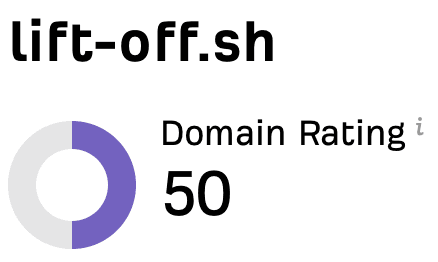
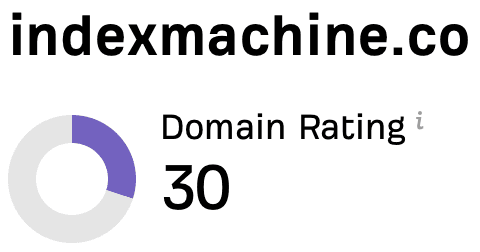
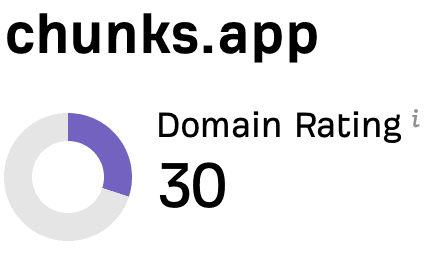
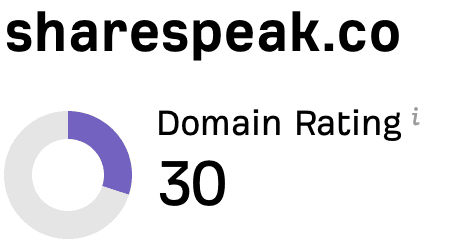
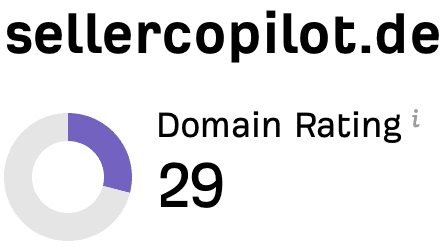
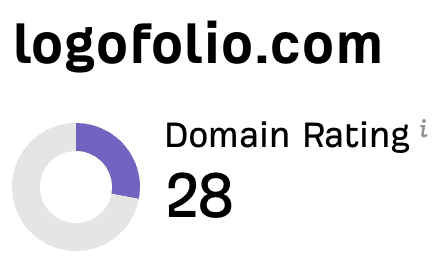
Real backlinks. Real DR. Real proof.
€104.98 DIY, or 100 done for $79.
LaunchRepo is a private repository of guides your own AI agent follows while you handle the logins, the CAPTCHAs and the emailed codes, and every badge directory is either a redeploy of your production site or a job for you. It is €104.98 today, about $120, rising 20% after every 20 sales, with your AI usage on top and all sales final. Submitator is $29 for 30 directories, $49 for 60 and $79 for 100, submitted for you, with every badge kept live through one component. All the submission tools compared.
FAQ
Is LaunchRepo a directory submission service?
No, and it is the first to say so. Its terms carry the heading “LaunchRepo is not a submission service” and the sentence “We do not submit your product anywhere.” It is a private GitHub repository of platform guides that your own AI agent (Claude Code, Codex or Cursor, connected to Chrome) follows, while you log in, solve the CAPTCHAs and handle the emailed codes. Submitator is the service: you pick the directories and we do the submitting.
How much does LaunchRepo cost?
€104.98 once at our 24 September 2026 check: the €119.98 regular price less a €15 discount applied at checkout, about $120. The price rises 20% after every 20 completed sales, and that day six sales remained before the next step, €143.98. Your AI provider's usage is billed on top, and all sales are final. Submitator is $29 for 30 directories, $49 for 60 and $79 for 100, one-time.
Is LaunchRepo cheaper than Submitator?
For one product, no. €104.98 is about $120, which is more than our 100-directory plan and our 30-directory plan together: $108 for 130 directories, submitted for you. Its next regular price, €143.98 or about $164, is more than our All Directories tier at $149, and on their published rule the step after that clears $149 even with the €15 discount. None of their figures includes the agent's usage.
How does LaunchRepo handle directory badges?
Through your production website, or through you. With your permission, its onboarding has the agent “add an official directory badge to that product’s footer, commit, push and redeploy”, and its glossary spells out what that means: “Adding one means a code change, a commit, a deploy and a public footer that now advertises a third party.” Its blog describes the other branch: a required badge “stops the run” and “you finish that step in your own browser.” In its own table of 134 zero-cost routes, 39 make a badge or a link on your site the condition of the free listing. Submitator installs one badge component once and keeps every directory's badge live.
Can LaunchRepo run unattended?
No, and it does not pretend to. Asked whether it submits while you sleep, its own answer is “No. Your agent runs in your session, in a browser you can see.” Its pricing page says it fits someone who can “supervise your agent”, and its FAQ says the permission that holds back a submission until you have reviewed it is one of the “instructions for your agent, rather than a software-enforced approval gate.” It is a second job for the length of your launch. Submitator is the other kind of purchase: you pay, you tick the directories and you lean back.
Can an AI agent submit my startup to directories?
Yes, with you beside it. LaunchRepo's own how-it-works page lists what comes back to you: “CAPTCHAs and bot checks” and “2FA and verification codes”, which “arrive in your mailbox in the connected browser.” We tried the agent route ourselves when we built the first version of Submitator. A directory took five to twenty minutes of agent time depending on its steps, the quality was low and the overhead high, so we built automation of our own instead.
Are LaunchRepo's guides kept up to date?
At our 24 September 2026 check the changelog was busy: eleven entries between 13 and 23 September and 165 guides rechecked on 23 September. The terms promise nothing beyond that: “Playbooks describe what we observed on the noted date; we are not obliged to keep them current.” The FAQ adds that there is “no promised update schedule or lifetime maintenance”, and an update is files you copy into your own workspace. We keep our automation current because a steady flow of customers means a changed form is one we are filing ourselves.
Does LaunchRepo offer refunds?
No. Section 6 of its terms is headed “All sales are final”, and the pricing FAQ answers “Are there refunds?” with “No.” It is digital content delivered the moment you pay, and they say so plainly. Submitator has a 30-day refund policy on the conditions in our terms, and on our packs a rejected submission is credited back as another directory of your choice.
Is LaunchRepo legit?
Yes. It is sold by The CodeCave GmbH, a German company with a full imprint, and its founder, Aleksandar Vuk Jovanovic, publishes under his own name. The documentation is unusually honest about what the product does not do, including a pricing page that says who it is not for. It is also a toolkit, not a service, and the work it describes is yours.
What is the best LaunchRepo alternative?
If you want the submissions rather than the instructions, Submitator: $29 for 30 directories, $49 for 60, $79 for 100 or $149 once for every directory in our catalog and every one we add, on one project. You pick the directories, we submit from an inbox we create for you, one badge component installs and keeps every required badge live and the paid tier on nine directories is already in the plan.
Comparing options? See the others.
Their €104.98 buys the guides. Our $79 buys 100, done.
You pick the directories and we submit them from an inbox we run. One component keeps every badge live, the paid tier on nine directories comes with the plan and the only thing left to supervise is your product.